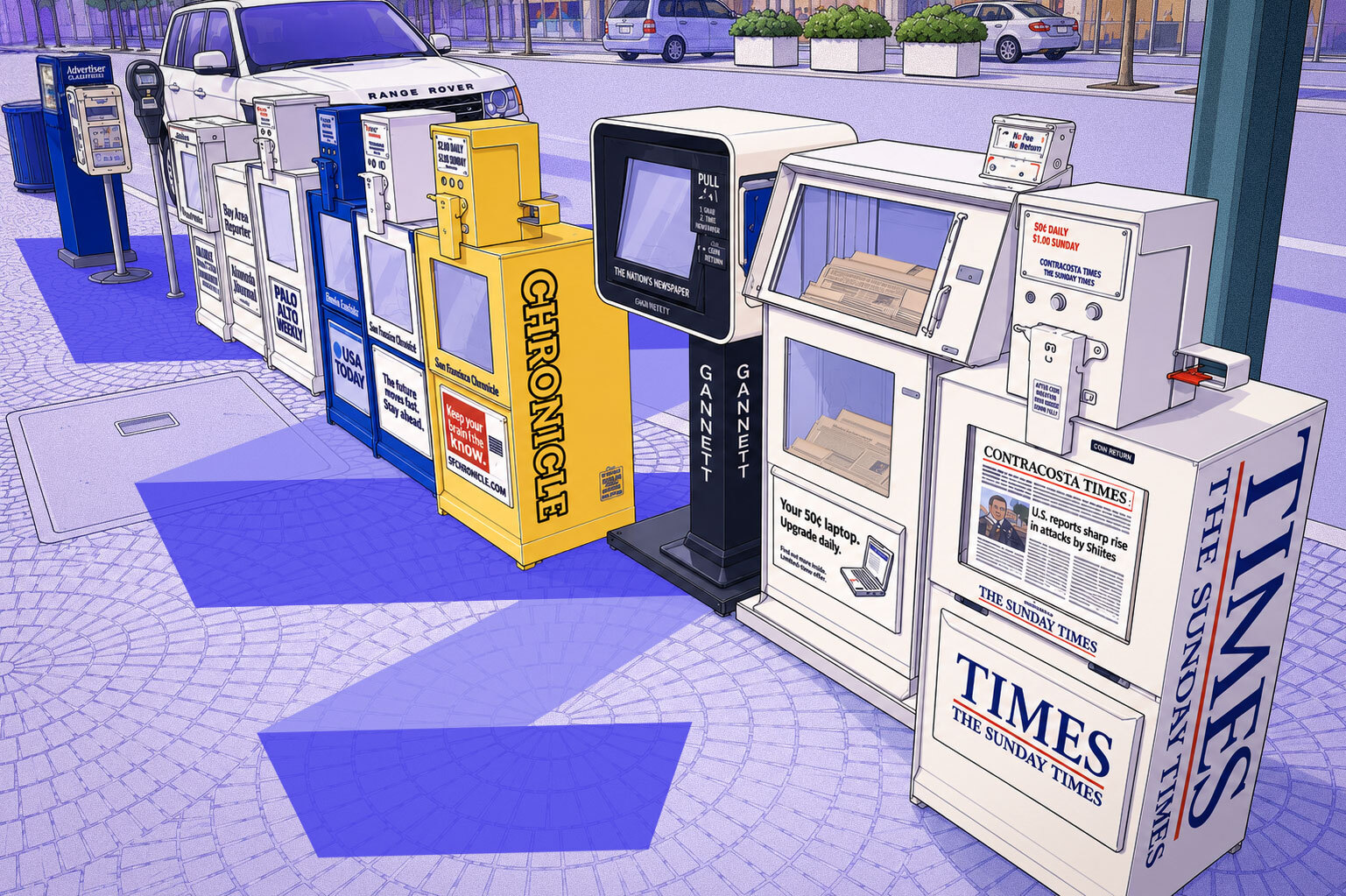
At a conference earlier this month, an executive at a major publisher who was participating in a panel proclaimed, in high dudgeon, that they were going to block Google. Why? Because Google reneged on its “deal” to send traffic directly to publishers. When are they blocking Google? Well, not today. But soon!
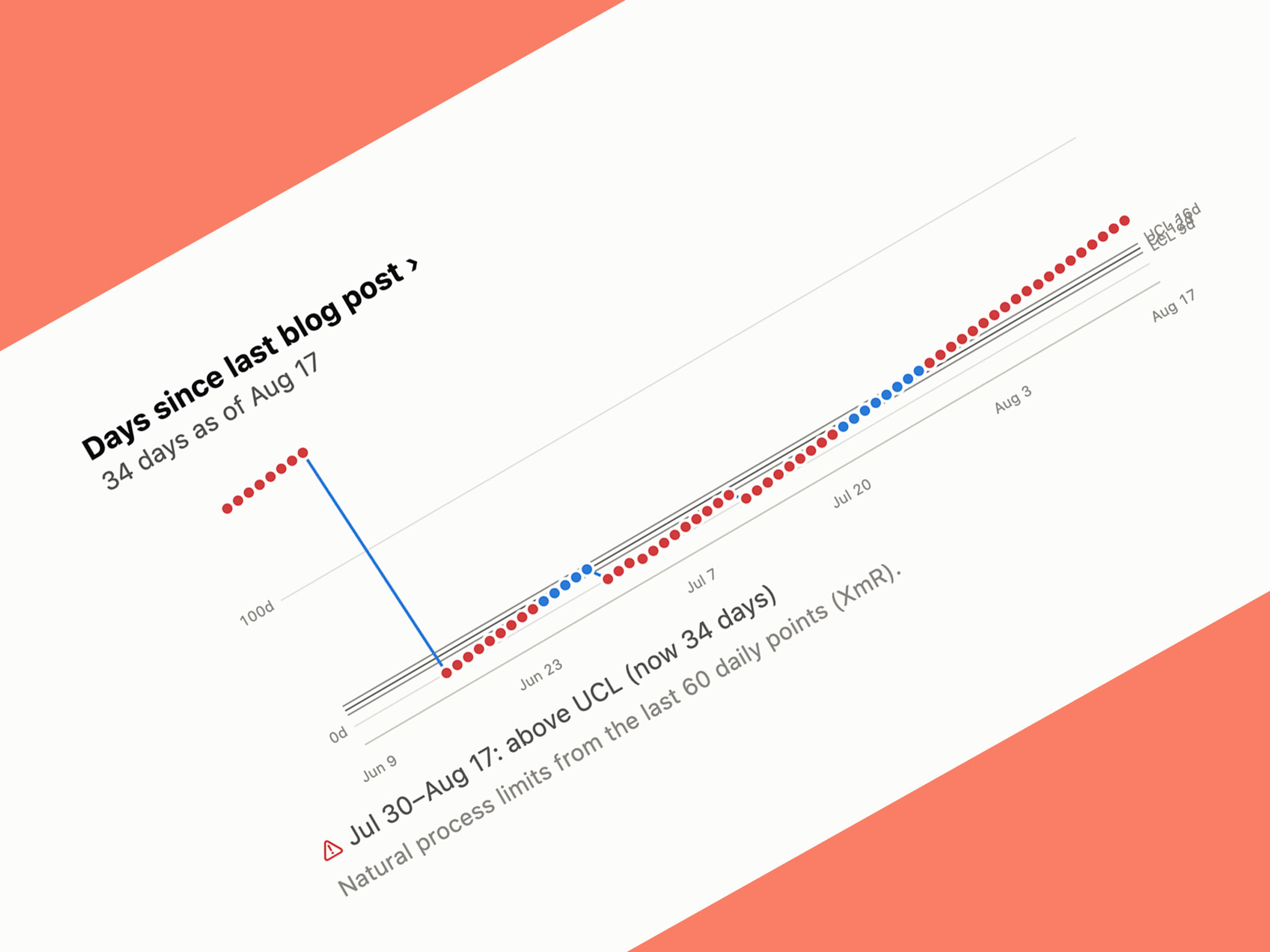
This line of reasoning has always rubbed me the wrong way. First, Google Zero is a thought experiment, not a definite outcome. It was first proposed in 2024 by Nilay Patel, editor-in-chief of The Verge. Two years later, Google Zero has become a shorthand for this period of decline. Better put, we might say that referral traffic from Google is declining after decades of growth, and some predict it will decline to zero, but this doesn’t have the zesty ring of Google Zero. I predict that it will asymptotically approach a non-zero equilibrium. User habits are hard to change, which is why Yahoo still has more than 1% of the global search market.
Speaking of Yahoo, their famous decline from a position of strength may be what worries Google itself. Google’s search algorithm represented a sea change for the internet, and they earned their audience with a more usable and accurate interface. LLMs are the first technology to legitimately challenge PageRank. LLMs, however, are fairly decentralized for such a powerful tool. Google built its fortress on its core search algorithm, but we cannot say that any company has a chatbot advantage — several companies have good ones, and open weight models mean that any motivated firm can access the technology. Competitively, Google probably has to offer contextual responses to search queries.
The second part of this argument that feels flawed is that the “deal” with Google was more like a truce than an agreement, except that Google’s market cap is 200 times larger than the largest pure news company. Findability is a key affordance of knowledge resources like Google, and no news publisher is truly encyclopedic.
This isn’t to excuse Google’s choices, only to try and explain them. Google’s conduct towards news publishers is unfair, and unfair treatment of small players by the very large is a special kind of injustice.
This may be the thing that bothers me the most: When we talk about the “deal” we had with Google, the implication is that traffic is a commodity — a stream or a flow, website visitors as an asset like oil. The publishers that don’t have to worry so much about Google Zero are those that have direct relationships with their audience and ways to get in front of new humans without Google’s pipeline. Ideally, these publishers can simply take what referrals they get from Google into the top of their funnel. The publishers who are most at risk are the ones who treat people like oil.
The panel turned to what I agree is a necessary long-term solution here. Google and anyone else indexing news content, including OpenAI and Anthropic, ought to license that content. Licensing content may not even be enough considering that many LLMs were trained on publishers’ intellectual property, but that’s clearly a judicial question, it can’t be solved by robots.txt or Cloudflare.
Still, for most publishers, quitting Google is like quitting a job because you’re mad at your boss. You need the income but she can replace you tomorrow.