Last week we announced that Allegro Audience is now in public alpha and wanted to share more about why we're taking on this challenge.
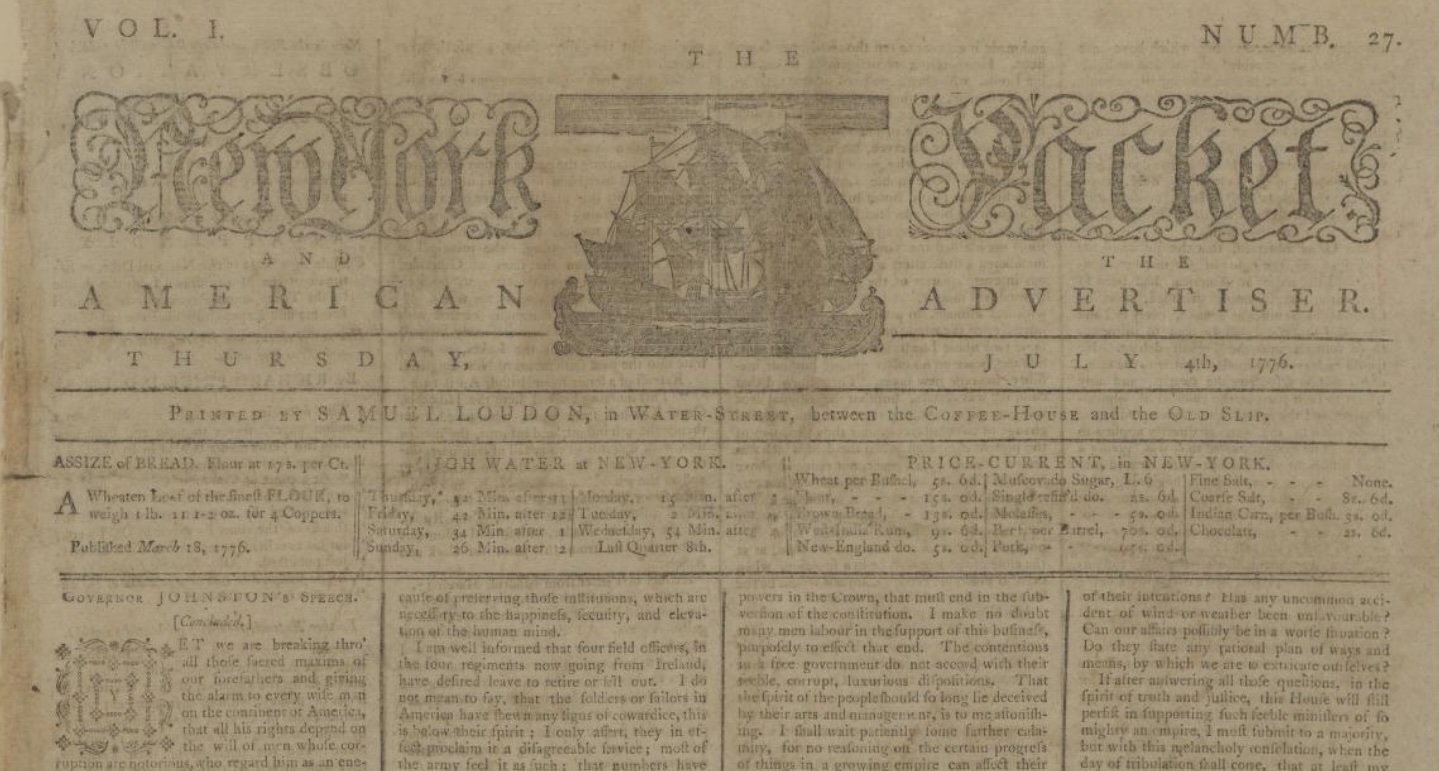
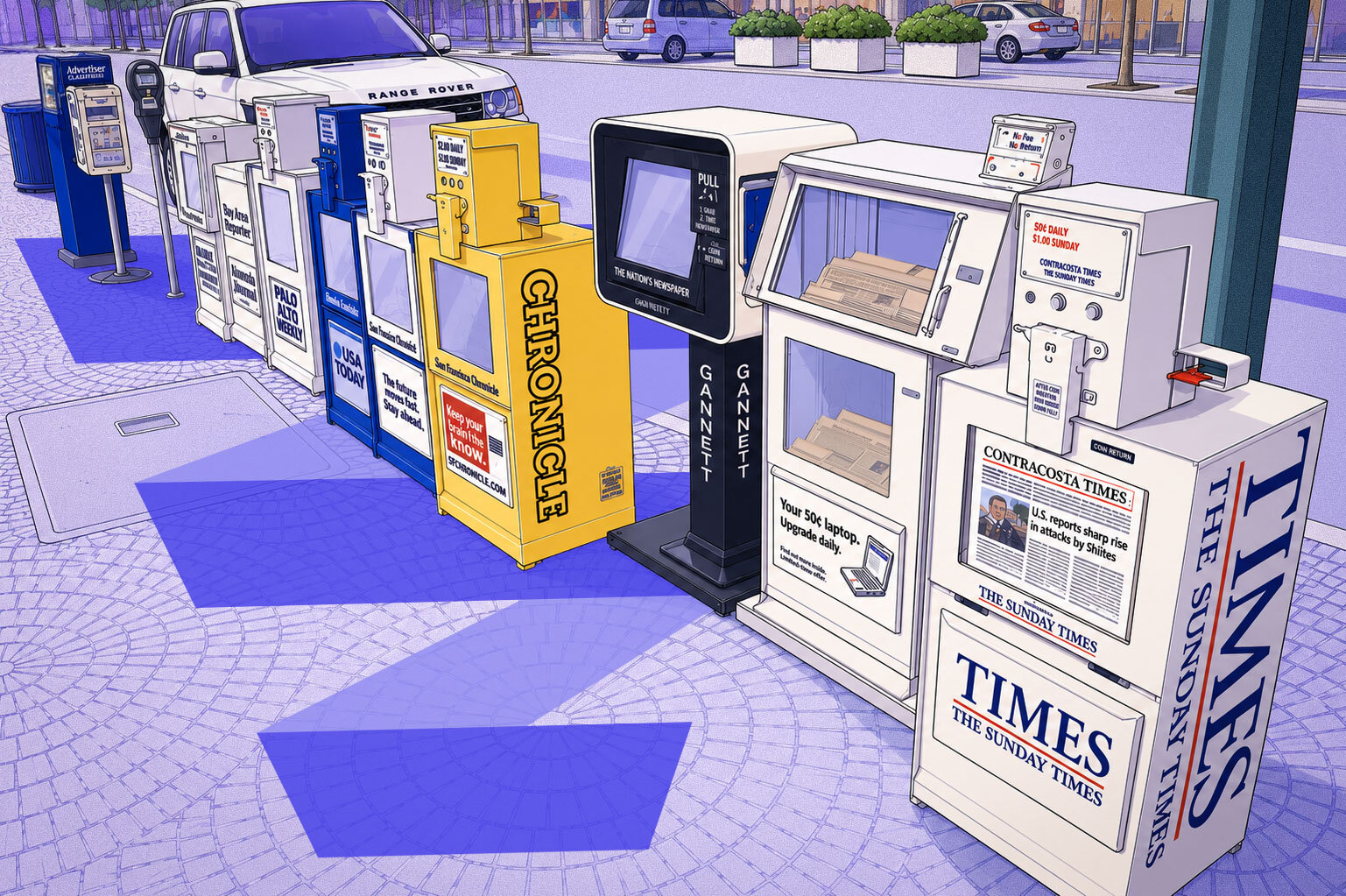
The commerce layer has always been core to publishers and must be treated as a first-class part of the technology ecosystem. News organizations have been charging for regular access to the news for hundreds of years. The first newspapers in the Western World arose in the early 1600s, and the first daily British paper in 1702. In 1833, The New York Sun launched the first successful American "penny press" which sold papers for $0.01 and kicked off the modern evolution of the newspaper, along with some of the first paper routes. This culminated in what I sometimes refer to as "the internet on your doorstep" that typified papers of the late 20th century, before the internet itself became the primary vector for the delivery of the news.
New Old Web is a blog published by Alley and Lede. We're researchers, strategists, designers, and developers who want to make the internet a fun place to live and work.
The layers of technology and commerce implicit in printed paper meant that the product itself was produced fully without regard to payment or not; the act of acquiring the paper at a newsstand was similar to buying, say, a treat at a frozen banana stand. Pay the money, get the banana. No money, no banana. As with so much else about the transition of newsprint to online media, subscription payments online have retained a lot of their pre-internet character. This is how the Wall Street Journal’s paywall worked when it debuted thirty years ago as the first major national newspaper to bet on paid online access. It’s largely how WSJ still works today.
When over-the-air media like radio and television experiment with digital revenue, they bring a different blend of economic models. Broadcast radio and television have always been free over the air. Paid television came through cable, which carried a subscription fee from the start, and in 1972 HBO debuted as the first premium channel layered on top of it. Even now, commercial AM and FM radio and over-the-air television remain monetized almost entirely by advertisements (TV stations earn cable retransmission fees as a large source of their total revenue, but that doesn't cover any consumers still receiving the signal with an antenna). Public radio and public television are exceptions to the advertising model in that they do draw support from "members like you" and benefit from civic and arts-minded donors who are willing to pay more than the value of the advertisements to support what they see as a worthy cause and, as a positive side effect, avoid most forms of advertising.
Online, minimizing the impact of advertising has become imperative for most publishers. Only under the “fix what will kill you first” theory of crisis management has acute search decline (“Google Zero”) eclipsed the ongoing challenge of Google and Meta’s oligopoly reducing most advertising on most news websites to a remnant of the total internet advertising pie. The project is easy to describe but hard to solve: Know the audience, build a commercial relationship with the audience, and keep them coming back. If building audience loyalty was important before, it’s make-or-break for a lot of publishers at this point.
Fortunately, many organizations started down this path long ago and are now iterating towards sustainability. It's created a need for systems that integrate with news websites and apps to provide the customer data management and payments infrastructure. Technology platforms designed to address this market have existed about as long as news has been online. Many of the earliest were simple systems, developed in-house. But by the mid-2000s, a crop of startups started to attempt to tackle this problem at scale. What we're left with today in this ecosystem is a small cadre of commercial vendors, mostly funded by venture or private equity funds, and mostly built on old, proprietary technologies.
Publishers that are building audience technology for the first time are typically using models more complicated than the hard paywalls found on longtime subscription sites. The spectrum of subscriptions, memberships, donations, and tips is robust, with publishers found at every product combination. Public media, for example, is asking hard questions about what membership means online, but most don’t have the tools needed to enable real-time decisions based on member data.
If you're interested in exploring what we've built, get in touch with us at AllegroAudience.com. If you want to hear more about it, drop your email below.