The day we celebrate as the birthday of the United States is, strictly speaking, the day in 1776 that Congress adopted the wording of the Declaration of Independence and sent it to print. Congress had voted for independence two days earlier, on July 2nd — the date John Adams assumed we would mark. With the completed draft in hand, the founders directed Philadelphia printer John Dunlap to run off some two hundred copies on the night of July 4th, and it is the printing we remember. It wasn’t read to the public until July 8th, and wasn’t signed until later that summer. It was syndicated across many colonial newspapers, which also covered its readings and public conversations about it.
It is appropriate to our country’s celebrated, if presently tenuous, tradition of press freedom that we celebrate July 4th as our nation’s birthday, not one of the other dates when it was adopted, shared, or signed. The authors of the Declaration of Independence wanted to share their draft widely to build consensus and to make the cause of liberty serious and actionable. As Max Larkin writes in a beautifully researched piece for the Harvard Gazette marking this same July 4th, Dunlap’s initial print run was hasty and full of minor mistakes that explain the authors’ intent. “11 of 21 copies studied showed signs of ‘offsetting’ — inverted ink stains from being folded while still wet. Others are torn along the fold.” This was democracy in action, not an edict from a group of elders.
New Old Web is a blog published by Alley and Lede. We're researchers, strategists, designers, and developers who want to make the internet a fun place to live and work.
The proliferation of printed material in the American colonies also contributed to the conditions for revolution. The founding fathers and their influences are sometimes compared to early bloggers for their voracious posting habits, trading eloquent essays and barbed trolls in pamphlets, newspapers, and the occasional book-length diatribe. While the British used libel and sedition laws to censor criticism of the king and his government, they were far away and losing their grasp on the zeitgeist as the colonies grew faster than they were able to scale their government, and increasingly had more visible and physical forms of protest to focus on.
Likewise, distrust of the press establishment has a storied history. Jefferson famously said in 1807 to John Norvell, “Nothing can now be believed which is seen in a newspaper. Truth itself becomes suspicious by being put into that polluted vehicle.” Yet the founders protected press freedoms, enshrining it in their First Amendment to the United States Constitution some fifteen years later. The messy exchange of ideas in the press and in debate is a core part of our story as a nation.
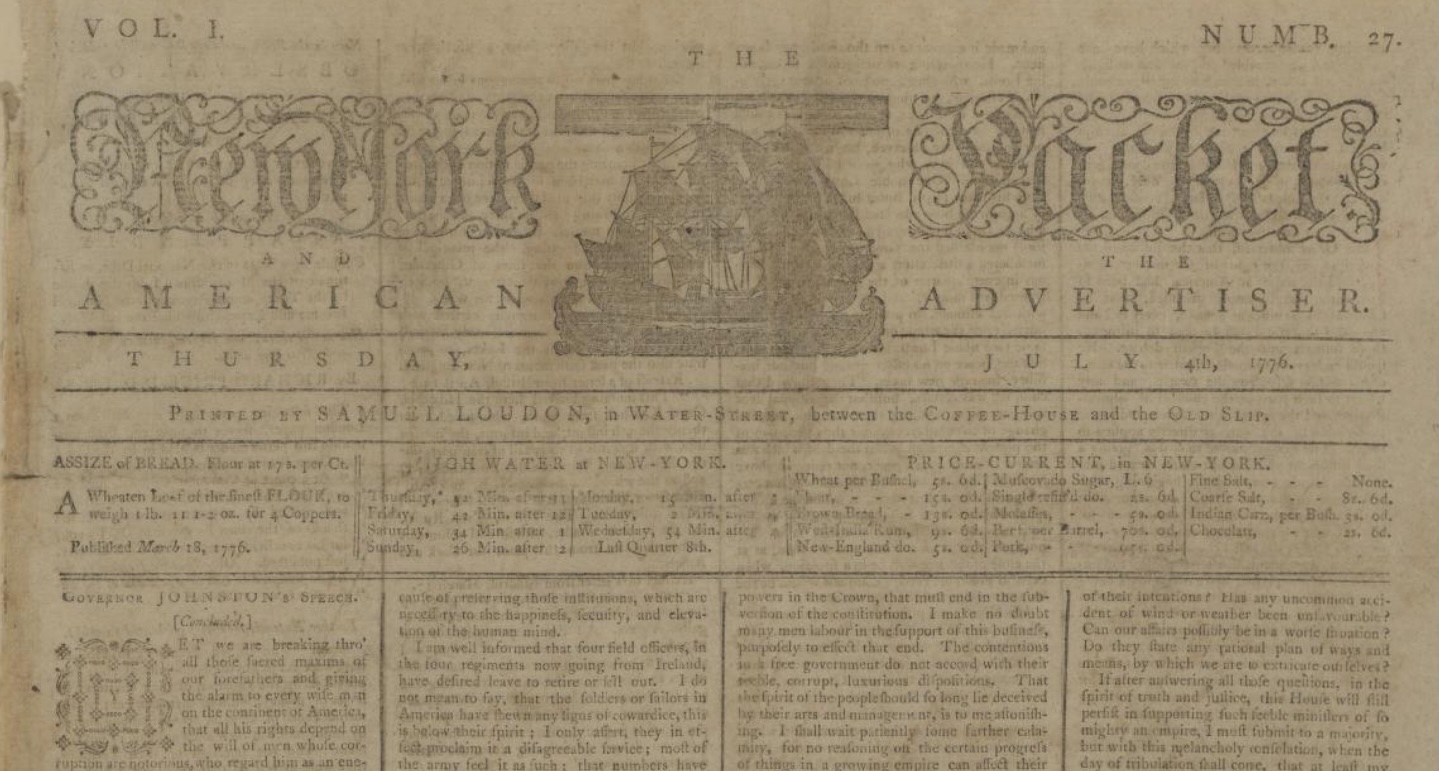
But did that kind of speech pay the bills? The July 4th, 1776 edition of the New York Packet and American Advertiser, digitally preserved by the Library of Congress, leads its front page with the fixed price for bread, other commodity prices, and high tide schedules in New York before yielding to the transcription of a speech and a dispatch from London. The inner pages are given over to business notices and advertisements. Nothing that anyone would consider seditious, just normal requests for workers and notices of the availability of goods and services. So the press clearly brought commerce along with speech — a steady-state of revenue and support by virtue of its ability to spread information that shaped the daily life of local people.
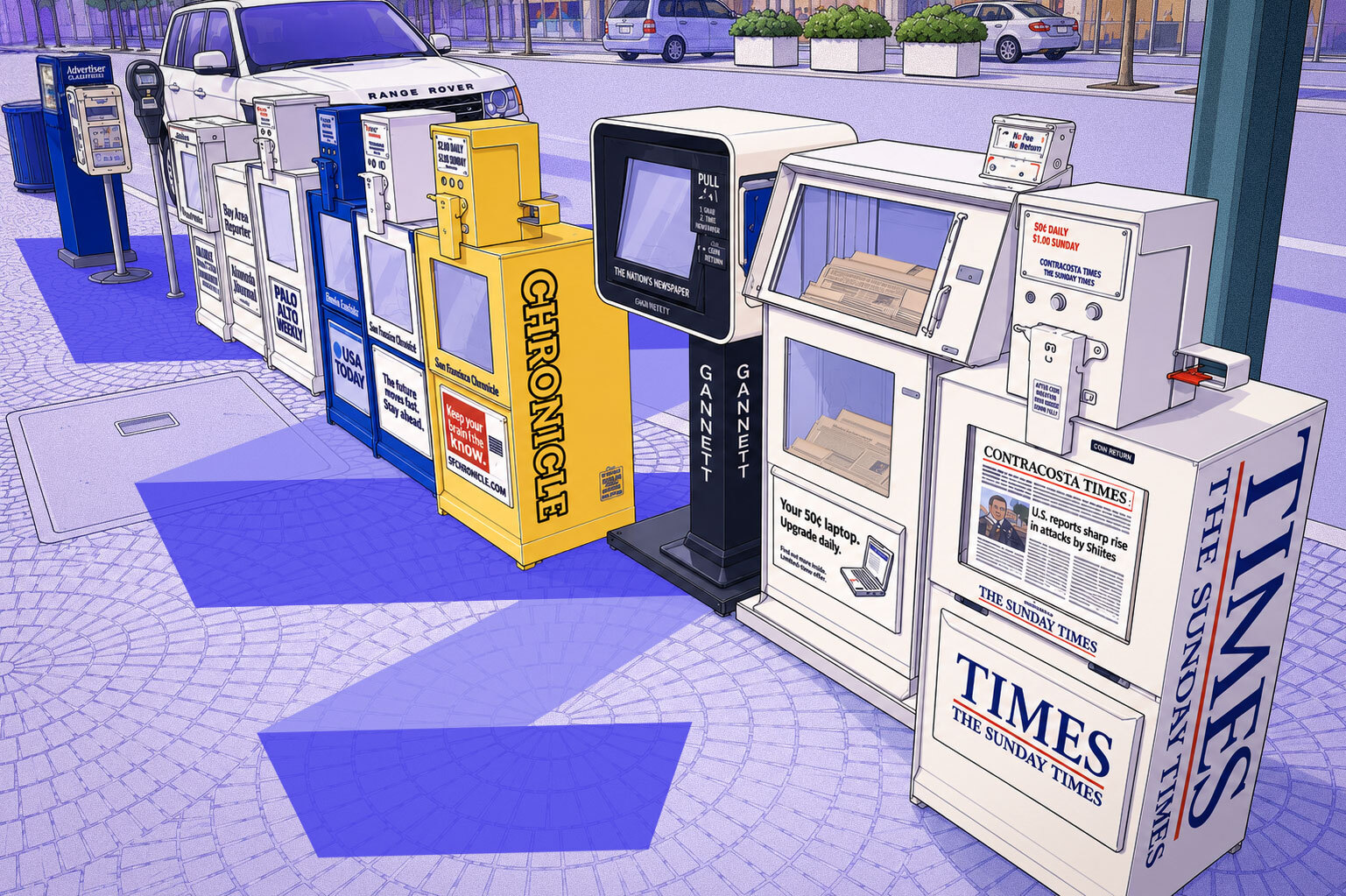
However, in just the last twenty-five years, a tenth of our history, the useful information that once traveled with the news has been unbundled from the journalism itself, and not only in the United States. The stock prices, the tide tables, even the weather and traffic that radio and television briefly made their own: one by one, the things that drew the audience and paid the bills have peeled off to live somewhere else. What is left is deeper, harder journalism alongside the kinds of messy conversations that can trouble leaders like Jefferson, but which are altogether necessary to democracy, and which must be preserved if we are to make it another twenty-five years — to say nothing of another two hundred and fifty.